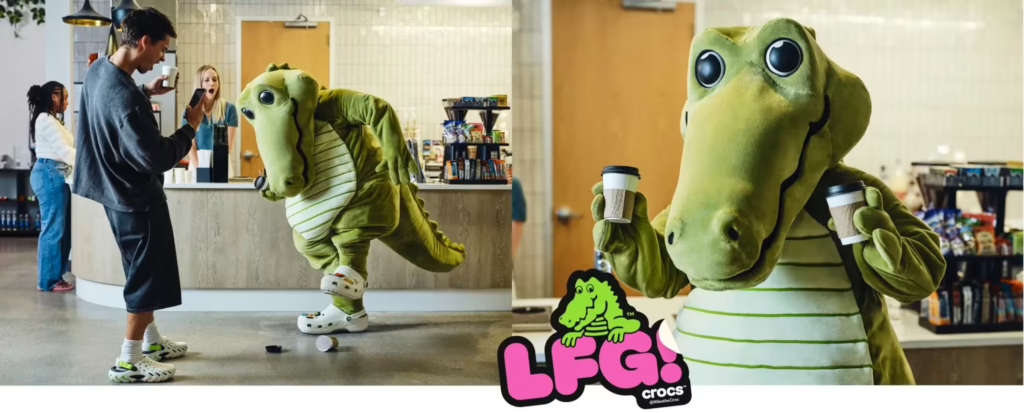

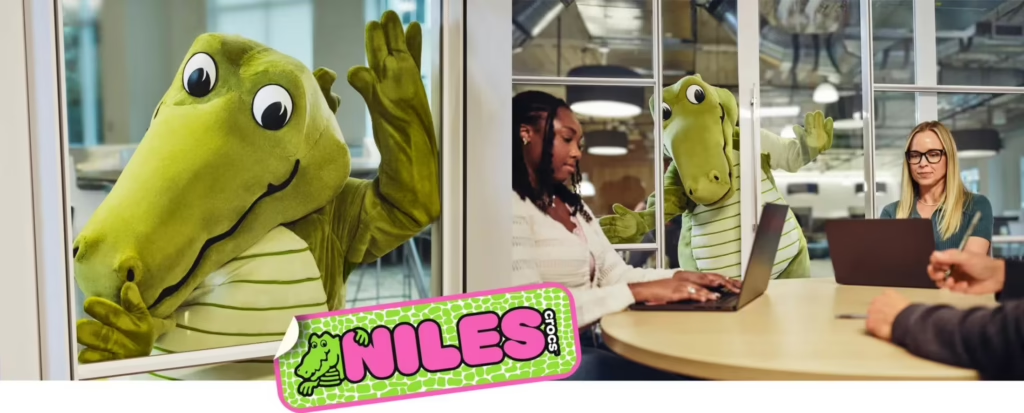
Today, Crocs announced the launch of its new mascot Niles, a six-foot two crocodile character built from the silhouette that’s been stamped on the side of every Classic Clog since 2002. Brands giving themselves an avatar to create a warmer association for audiences than a name or logo alone is nothing new, but the way Crocs is deploying their new mascot is. Niles the Croc is being introduced at the outset with a weekly microseries filmed at Crocs headquarters, built like a sitcom, with what the brand is calling his own personality, interests, flaws and ambitions.
Where a mascot used to be a byproduct of good advertising, a character audiences liked enough that the brand kept bringing him back, the introduction of this mascot feels more like a brand building their own IP the way studios build franchises: with lore and a content calendar. It raises the interesting question of whether a mascot, deployed as entertainment-style IP, can capture audience attention and carry a brand’s entertainment marketing strategy.
Duolingo answered that question first, and the results reshaped how the industry thinks about owned characters. Duo started in 2021 as a reactive TikTok bit, a slightly unhinged owl mixed into whatever was trending that week. But the character didn’t stay a bit. Duo turned into a full-fledged main character, appearing in everything from snackable cartoons to music videos, and ultimately into a company-wide bet big enough to fake the character’s death in early 2025 and turn their resurrection into a global engagement event measured in the billions of completed lessons. By October of that year, Duo had their own five-episode anime series, produced with Titmouse, the studio behind Big Mouth and Star Trek: Lower Decks. Duo’s meteoric rise not just as a mascot, but as a character that audiences wanted to continue to playfully engage with, opened the door to the modern conversation around leveraging brand IP in this non-interruptive way.

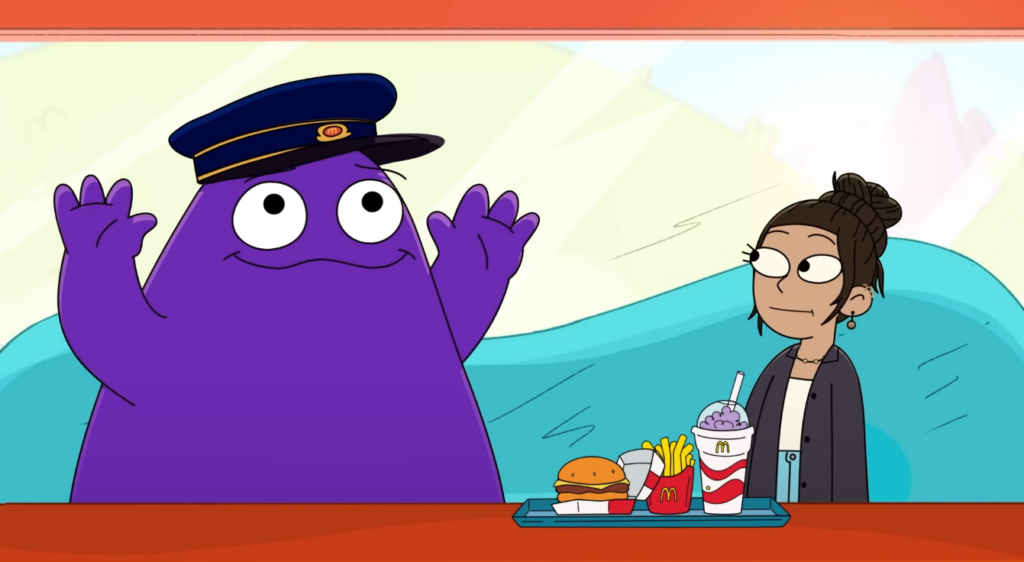
McDonald’s is another example that offers a longer and more familiar view. Ronald McDonald and the McDonaldland cast have functioned as brand identity since the 1970s, and for most of that run, identity was the extent of the job. But look at what McDonald’s has done with that cast lately. The 2023 Grimace birthday campaign turned a fifty-year-old purple blob into a genuine TikTok moment. And last year’s Lost in McDonaldland returned Grimace, Birdie and Hamburglar to their origins for a serialized weekly cartoon for adults. A collective of classic mascots was repurposed for the modern moment, making the leap from characters that behave like signage to personalities at the center of digital and social media. Even McDonald’s, a company that could coast on Ronald forever, chose to build new original formats around old characters instead.
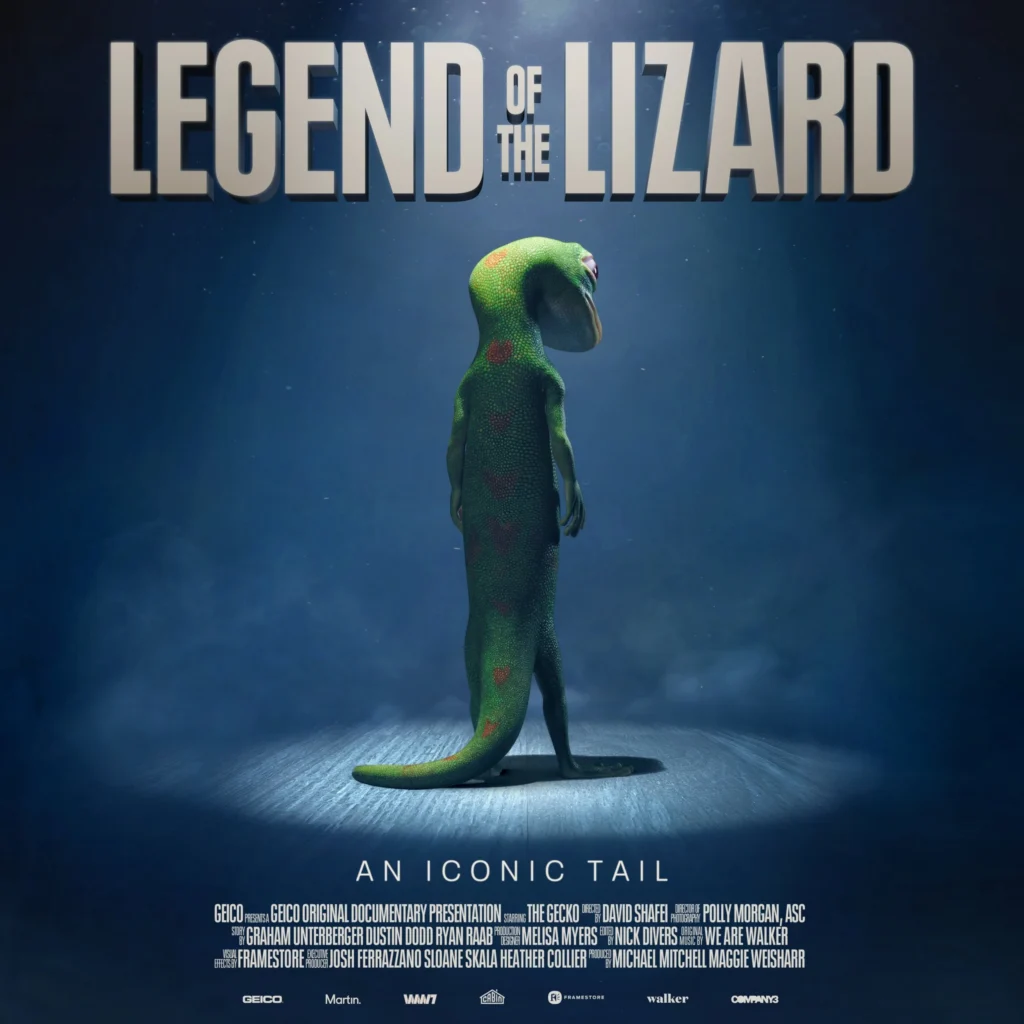
Geico stands out as one of the foremost examples of nailing the integration of story directly into their marketing by raising characters in successful campaigns to mascot status. But in this context, Geico’s arc is most instructive because it includes a real failure. In 2007, ABC took the Geico cavemen out of their thirty-second ads and gave them a network sitcom. It lasted seven episodes. The show stripped out everything that made the ads work and replaced it with a laugh-track premise about cavemen navigating modern prejudice, a format the joke was never built to sustain. This is where brand storytelling earns its keep, or doesn’t. Cavemen failed because it attempted to insert a beloved character into a format it wasn’t built for. Geico seemed to learn that lesson, and in February 2024, ahead of Super Bowl LVIII, the brand released Legend of the Lizard, a 15-minute mockumentary tracing the Gecko’s fictional origin story, released natively on YouTube and TikTok. It kept the same dry, straight-faced tone that already worked in Geico’s ads and simply gave it more room. What’s more, it added another dimension to the doc by creating corresponding ads featuring the caveman and his disdain for the gecko’s widespread fame. It was a reclamation of what Geico does best, and used the successful ad model of their past to funnel audiences toward a newer, longer entry that preserved the humorous entertainment language of the brand.
For the brands leveraging their own characters to create content, it works because the terms of entertainment have loosened. A brand doesn’t need a network pickup to build a series. It needs a platform, a compelling character, and a willingness to let a story unfold in pieces instead of resolving in thirty seconds. Niles is stepping into exactly that opening for Crocs. His launch, teased for a month through hidden eggs across the brand’s social channels before a live “hatching,” and now unfolding through weekly episodes shot inside the company’s own offices, is built for repeated engagement. Crocs isn’t asking more of its mascot than for him to be likable enough that people scroll through for the next episode. Whether that’s enough to sustain a character over years, the way Duo has, remains to be seen.
And although Crocs is the latest to launch a new mascot, the brand is far from alone. This same instinct is spreading well beyond apps, food and fashion. What differentiates Niles the Croc from other mascots popping up of late is the express strategic goal of leveraging him as a character around which to develop social and serialized entertainment. It will be interesting to see what becomes of this brand’s new inroads into content, and if more of the brands adopting new mascots will follow suit.