


The challenge for brands entering entertainment is no longer convincing the market that the category has value. It is building work that can survive the same scrutiny as everything else competing for audience attention. A brand can bring funding, ambition, and a clear business objective to the table, but none of that guarantees a show people will choose to watch, a buyer will take seriously, or a platform will see as additive to its programming slate.
That distinction sits at the center of Carlotta Rossi Spencer’s work at Banijay Entertainment. As Global Head of Branded Entertainment Business Development, Rossi Spencer evaluates brand-funded projects through the same lens Banijay brings to any piece of IP: whether the concept is strong, the audience is clear, the storytelling has emotional appeal, and the brand’s role enhances rather than overwhelms the work. Recent Banijay projects including Cancer Detectives: Finding the Cures, Jeremy Pang’s Hong Kong Kitchen, Maître Chocolatier, and Big Brother: Knossi Edition show how branded entertainment can operate across factual, food, returnable formats, digital-first programming, and broadcaster-led slates when the content is built for audience value first.
Brand Storytelling caught up with Rossi Spencer to discuss what separates branded content that feels like marketing from work that functions as entertainment, the common mistakes that keep promising ideas from reaching the market, and how brands can structure their stories, partnerships, and expectations if they want to create projects capable of attracting serious interest from producers, platforms, and global buyers.

Over the last several years, how have you seen the relationship between brands and entertainment evolve, and what factors have made branded entertainment a more serious consideration for companies like Banijay?
Over the past few years, we’ve seen a clear shift to brands becoming true content partners. Audiences are increasingly resistant to traditional advertising, so brands are looking for deeper, more authentic ways to connect. At the same time, the fragmentation of platforms has created huge demand for differentiated content, which brands can help unlock through funding and collaboration. For a company like Banijay Entertainment, which is renowned for its portfolio of globally acclaimed shows, that evolution makes branded entertainment a natural extension of our core business. It’s about applying the same storytelling expertise and production standards we apply to all our productions.
Banijay sits at the center of the global content market, so what trends are you currently seeing in the volume, quality, and ambition of brand-funded entertainment entering the ecosystem?
Investment from brands in content is increasing significantly, which is having a positive impact on quality. More projects are now being developed to the same creative standards as premium productions, designed to sit seamlessly alongside non-branded programming. Shows like Cancer Detectives: Finding the Cures, produced by Banijay UK’s Dragonfly, have achieved major recognition in the advertising sector, while sitting firmly within a broadcaster’s factual slate. Brands have a greater understanding of the impact content can have for their ambitions, so there is more volume coming into the market.
We’re also seeing a shift away from experimentation, towards long-term strategies, with brands better understanding both the investment required and the long-term value this kind of content can deliver.
Now, there is diversification in format and genre – from large-scale factual series through to returnable formats, scripted, social-first, and micro-content. And we are seeing continued diversification of platforms – the distribution footprint of our branded entertainment spans streamers, linear broadcasters, and digital-first environments, reflecting the increased need to meet audiences across multiple touchpoints.
What separates a piece of brand-funded content that feels like marketing from one that genuinely functions as entertainment capable of attracting audiences, buyers, and distribution partners?
The key difference is whether the idea starts with the audience or the brand message. If the primary goal is to communicate a product benefit, it will almost always feel like marketing. If it starts with entertainment, storytelling, and emotion, it can stand on its own as a show.
The best examples of branded entertainment integrate the brand in a way that feels organic and often secondary to the story itself. Ultimately, if you removed the brand and the content still works, that’s usually a good indicator of genuine entertainment value.

As you evaluate projects from brands and agencies around the world, what are the most common mistakes that prevent otherwise promising concepts from reaching their full potential?
A common mistake is still treating it like advertising – focusing on product messaging rather than storytelling. Trying to make the brand too visible or too central to the narrative, at the expense of the storytelling can prevent a project from reaching its full potential.
Other recurring mistakes include chasing trends rather than building something authentic to the brand. We also see brands underestimating the importance of creative expertise – trying to build everything in-house rather than leaning into partners who understand how to create content that audiences genuinely choose to watch.
Conversely, what characteristics consistently appear in the projects that stand out as having real commercial and creative value?
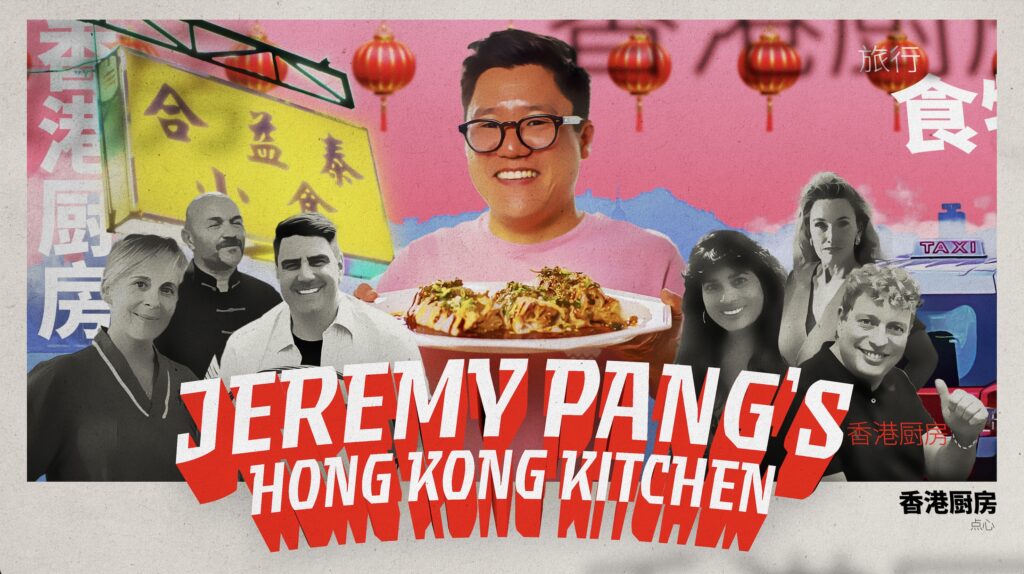
Clear KPIs are fundamental – they anchor the project from the outset and ensure alignment between the brand and the creative. Content that stands out, has a clear and compelling story, crafted for a well-defined audience, with a clear vision of where that audience is so it sits on the right platforms and is also marketed effectively. It has to be well-produced, and the brand integrated in a way that feels authentic rather than imposed. Take a show like Jeremy Pang’s Hong Kong Kitchen, produced by Banijay UK’s Electric Robin, where the brand partner (Hong Kong Tourism Board) enhanced the narrative with a series that worked on its own as a premium, and entertaining travel-food show, whilst triggering significant and measurable travel consideration and positive sentiment for the brand.
Banijay has often emphasized that the key word in branded entertainment is still “entertainment,” so how do you evaluate whether a project has enough audience appeal to succeed beyond the interests of the sponsoring brand?
We approach it in much the same way we would any other piece of IP: does it have a strong concept, does it engage emotionally, and does it feel distinctive in a crowded market? If it’s something a broadcaster or platform would seriously consider, that’s usually a strong indication that it has appeal beyond the interests of the sponsoring brand.
Broadcasters and platforms increasingly rely on data metrics when deciding whether to commission or renew a show, so ultimately, they are the key decision-makers. Our role is to bring our track record and market expertise to brands, helping them develop projects with the greatest chance of success. Based on our experience and know-how, we can be a strong partner to shape ideas that have genuine potential to resonate with audiences and succeed in the marketplace.
For brand leaders who aspire to create work that could attract interest from a major global producer, distributor, or buyer, what advice would you give them about how to structure both the content and the partnership from day one?
We need to start by being clear on what success looks like. Is it awareness, engagement, perception shift? That clarity allows you to build the right framework for both the content and the measurement. The best results come when brands trust creative partners to deliver something that works editorially as well as commercially.
From there, focus on the audience and the storytelling. Think about what people genuinely want to watch and where it fits in the wider content landscape. Bring producers and distributors into the process early, so the project is shaped with the market in mind – clarity around rights, territories, and long-term ambitions is essential from day one. Be open to the brand taking a more subtle role if that serves the content.
What opportunities do you believe are still being overlooked by brands entering entertainment today, particularly as distribution pathways continue to expand across television, streaming, digital platforms, and social ecosystems?
One of the biggest opportunities is thinking in terms of full content ecosystems. Branded content shouldn’t exist in isolation, it should play a strategic role within a wider marketing mix, feeding into broadcast, streaming, social and even live experiences, with each platform playing a different role in building engagement and extending reach. That also means recognising branded entertainment isn’t where brands should be spending 100% of their budgets, but when it sits alongside paid media, social, and other channels as part of a joined-up content ecosystem, it becomes far more effective.
There’s also an opportunity in investing in formats that can return and build audiences over time, rather than one-off projects, to further deepen audience connection, and deliver more sustained value. We’ve seen success in this space with projects like Maître Chocolatier, produced by Banijay Italia’s Nonpanic for Lindt, which has grown both audience and brand metrics season-on-season, and Big Brother: Knossi Edition, produced by Banijay Germany labels EndemolShine Germany, Rainer Laux Productions and Banijay Media Germany, for multiple brand partners, which has built a highly engaged, repeat audience across three seasons, through its evolving, digital format and community-led approach.

Looking ahead, what do you think the branded entertainment projects that break through globally over the next five years will have in common?
I think they will look and feel indistinguishable from the best non-branded content. The projects that succeed will be those that prioritize audience value above everything else.
They’ll need to be rooted in strong IP, and for global success, they will have to be developed with international audiences in mind from the outset – either through stories that can scale or formats that can travel.