

Most brand leaders, when pressure testing brand storytelling, ask the questions, “Why? What does it do? What results can it drive? What does this have to do with customer acquisition?”. These are all valid questions, but they also signal a misunderstanding of the nuance of the value derived from brand storytelling.
To be clear, nobody is denying the value of customer acquisition, or the desire to ask the question with the hopes that the answer will draw a straight line from it back to storytelling. But the harder question, the one most brands skip over on their way to the media buy, is how you move someone from ambivalent bystander to someone who opts in themselves.
The truth is there is no shortcut. As always, if you want to reach potential customers, you have to get them to listen. You have to earn enough of their attention that they want to make a choice, rather than waiting for you to make one for them. And in a world where ad aversion has basically become a personality trait for the audiences most brands are desperately trying to reach, a pre-roll they’re already skipping is not the place to make your case.
This is where brand storytelling earns its keep.
The latest brand storytelling endeavor from Acorns paints an elegant picture of how a brand can employ strategic thinking around the opportunity brand storytelling provides to drive a desired result. Here’s how they did it.
Earlier this month, Acorns released its 2026 Financial Wellness Report, based on a study of nearly 2,000 Americans conducted in April. The findings: financial stress is a near-universal experience, but respondents with more financial education reported higher net worth measures and greater financial satisfaction. Seventy-three percent of Millennials reported feeling compelled to conceal their true financial situation. Forty-four percent said they cope with financial stress by avoiding financial decisions altogether.
There is an inflection point here when considering how to deploy these findings. The interruptive route would take data like that, point to their product, buy ads highlighting the insight, and expect people to care. And sure, that’s the traditional route, one that will no doubt yield some results. But that route skips an entire layer of the problem. The data doesn’t just tell you what people are feeling. It tells you why the old message isn’t landing. If you’re paying attention, it tells you exactly what kind of activation might actually work instead.
What separates Acorns’ move here is that before they built anything, they ran their strategy through their own values. That matters, because values are the decision filters necessary for keeping brand entertainment authentic. Acorns’ values include leading with heart, building trust, never stopping growing, and most importantly, advancing their society by making financial wellness tools accessible to the up-and-coming. That last one is the entire orientation of the brand, and it’s the one that most strongly responds to the findings in their report.
Add it all up: a demographic carrying real financial shame, who won’t engage with content that makes them feel worse, and a brand whose stated mission is to meet that demographic with tools and education rather than judgment. The answer that falls out of that equation is strategic storytelling designed to speak directly to the demographic in question.
And so this week Acorns launched ‘Money Therapy‘, a mockumentary-style limited microseries that humorously depicts common money archetypes, each paired with “Therapy Notes” offering basic financial guidance. The format is doing a lot of strategic work. A mockumentary means the audience can laugh at recognizable behavior without feeling directly implicated. The characters are terrible with money so the viewer doesn’t have to admit their own troubles. Comedy functions as the entry point, and education travels along with it. Acorns CEO Noah Kerner framed the intention plainly: the goal was to take some of the shame out of the conversation and bring levity to the most common financial anxieties.
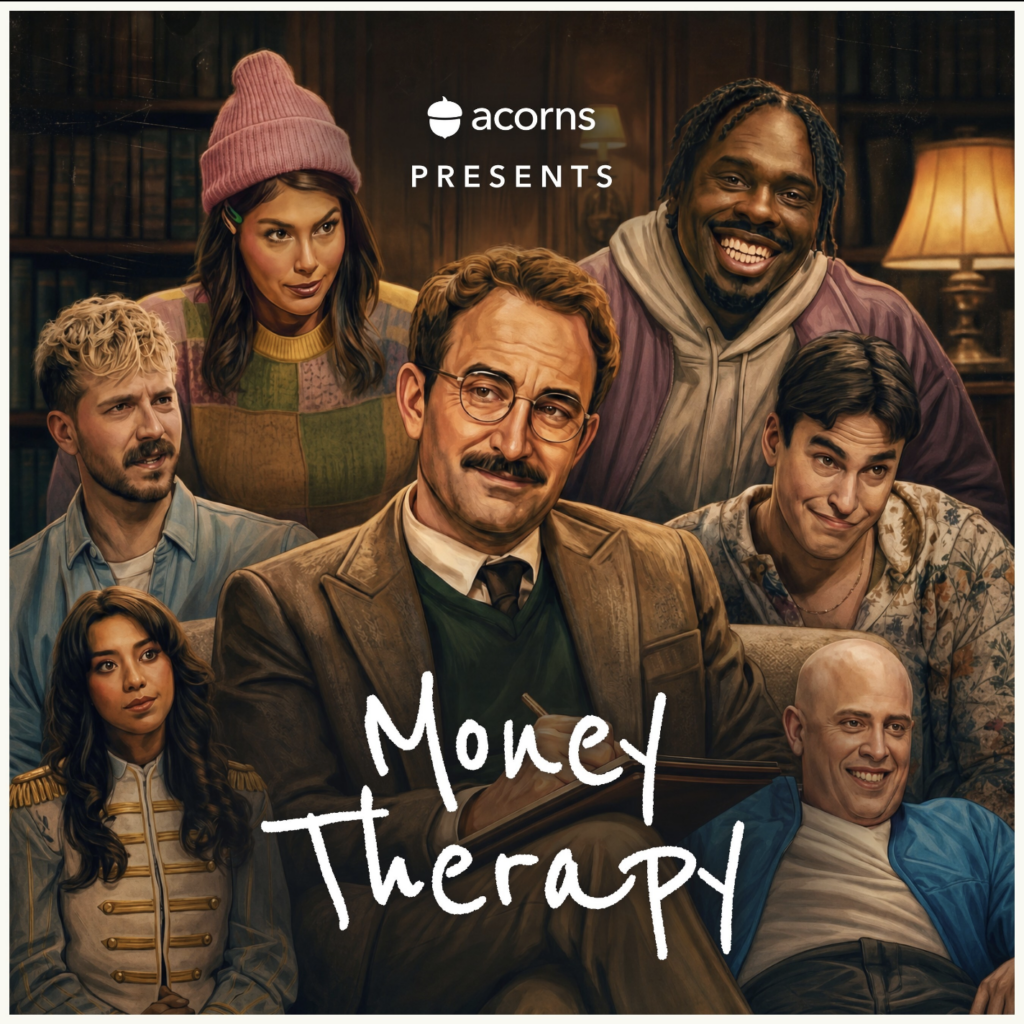
The format, platform, and talent choices weren’t arbitrary either. Acorns choice to launch on their social channels tracks. They have a built-in audience they’ve already cultivated, sitting at over 600,000 followers across channels. Their existing audience is made up of their target demo, and are primed to share a show that resonates with them with their own friends and audience. The same audience that, as Aivanta’s research in The Microdrama Revolution makes clear, doesn’t have a short attention span so much as it has re-engineered engagement. When you give them something worth stopping the scroll for, they will stay and watch.
Good brand storytelling doesn’t stop at awareness, though, and Acorns didn’t stop there. Alongside the series, they launched a “Money Therapist” hotline: an interactive social campaign inviting followers to DM their money stresses directly to Acorns, with eligible new customers receiving a twenty dollar promotional investment into an Acorns Invest account tied to a subscription. To review: the series earns the relationship, the hotline converts it, and the promo code removes the friction of starting. Each element is doing its job, and they’re all pointing the same direction.
What Acorns built is worth studying because of how precise it is. They used proprietary research to identify the emotional state of their target audience. They diagnosed why a direct sales message would fail that audience. They filtered their response through their own values to arrive at the right format, the right tone, and the right platform. And they engineered a follow-on touchpoint that turns engagement into acquisition. It’s succinct, strategic, consumable, and measurable.
This is what brand storytelling looks like when it’s working. A complete system, research to creative to conversion, built around a genuine understanding of who you’re trying to reach and what they actually need to hear.
If a financial app can figure out how to make saving money feel like something people choose instead of avoid, through a mockumentary series on social media, the real question is what your brand’s version of that looks like.