

The Mad Hattar founder explains how story and production discipline can turn brand activations into experiences audiences value.
Experiential marketing is often positioned as an escape from interruptive advertising, but physical presence alone does not make an experience worth anyone’s time. A branded space can be as easy to ignore as a banner ad when its narrative arrives late, its technology exists for spectacle, or its creators are treated as distribution rather than collaborators. The standard becomes even more demanding in the real world, where every creative choice has to survive contact with software, permitting, audience behavior and the unpredictability of a live environment.
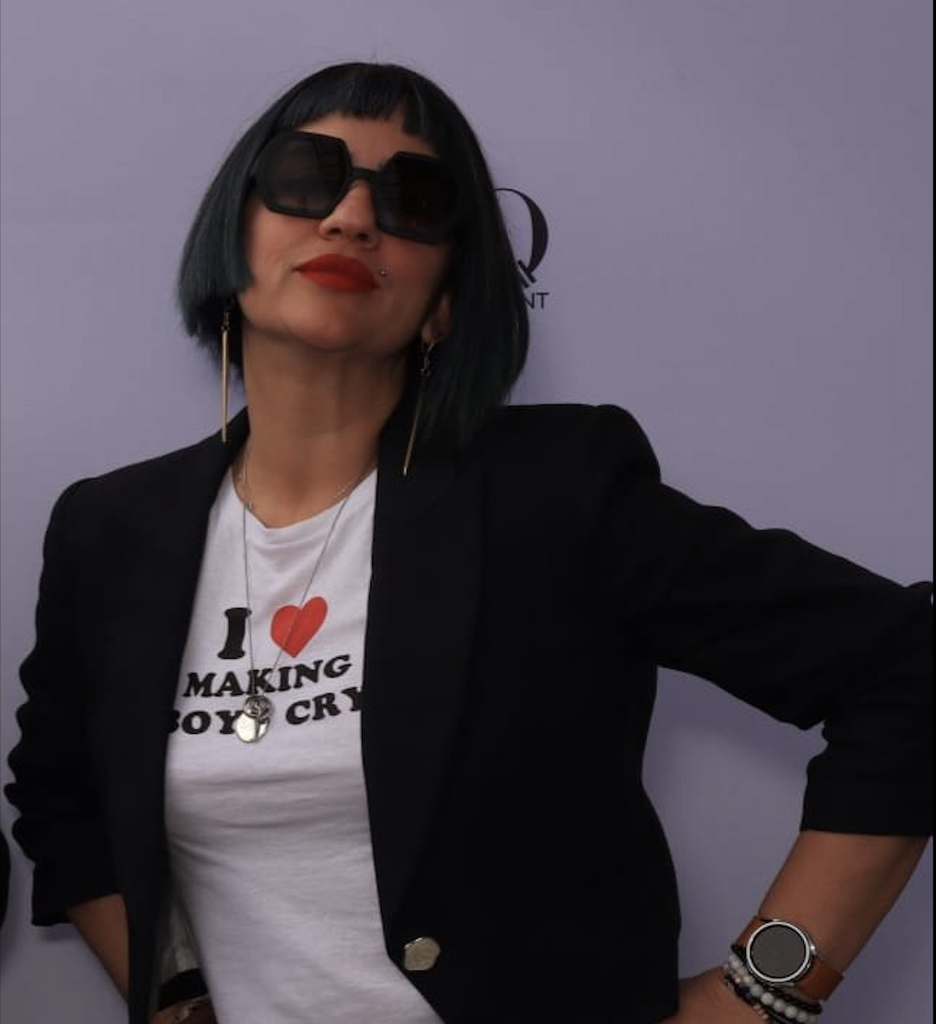
Rania Hattar has built a career inside that complexity. Before founding The Mad Hattar, she worked across film, television, fashion, advertising and live events, then helped build experiential capabilities at UNIT9 and expanded Thinkingbox’s U.S. presence. Her approach treats experiential as a form of spatial storytelling whose creative ambition depends on practical fluency and a team assembled around the specific community, technology and problem at hand.
Projects including Adobe Photoshop on Mobile’s creator-led At My Place campaign with Royel Otis and YouTube Shorts’ #RemakeTheRunway demonstrate that philosophy in practice. In each case, the product or platform shaped what audiences and creators could do, while the physical experience gave their participation a tangible payoff.
Brand Storytelling caught up with Hattar, founder and managing director of The Mad Hattar, to discuss building narrative into an experience from day one, deciding how visibly a brand should appear, and what ambitious work demands when there is no opportunity to fix it in post.
1. Your career has crossed film, television, fashion, advertising, and live events, so how have those different disciplines shaped your perspective on what makes an experience capable of telling a story?
Rania Hattar: Each one has its own discipline that is very important to bring into experiential producing overall, like what you learn on a shoot and how to manage all the fires you need to put out. It’s like my father always said: the more languages you know, the more swords you have in your arsenal. So, the more situational problems that you’ve learned how to put out, the stronger you are as an experiential producer.
As we know, experiential is not an event. It can be a fashion show. It can be a stunt video. It can be a digital experience walkthrough. So, you need to be knowledgeable and have touched all of these different corners. A couple of years ago, I found out that agencies talk to each other, and if a client asks for something really bizarre and experiential, I’m the person they call to see whether it can become a reality. For example, I had to find a cow rescue place in California so we could make sure that on the Fourth of July, we could bring all these cows out to a cookout and push plant-based meat.
A lot of people want to go into experiential and think it’s basically a video shoot without a camera. But, no. You’re solving problems that are as simple as a toilet overflowing. And then as complex as the coding of the software, and one of the lines is broken, and you need to identify which one it is. When you’re bidding on something, it’s as simple as adding a Raspberry Pi to the bottom of a cocktail glass so you can identify the flavors of a whiskey flight that you’re doing. Or, it could be a Bluetooth button so one bear can talk to the other.
2. When you founded The Mad Hattar, what did you believe was missing from the way brands and agencies were approaching experiential work, and what did you want your studio to do differently?
RH: When I founded The Mad Hattar, I felt brands and agencies were approaching experiential work too rigidly.
In his 1999 book Experiential Marketing, Columbia Business School professor Bernd H. Schmitt argued that the future would become increasingly digital and that brands would need experiences people could touch and interact with. I started seeing the need for the “rubber band effect”: the idea that you have to grow, expand and shrink according to the needs of each project.
Earlier in my career, I worked with many production companies and agencies that had ten or so creative directors in-house, who would be on every project whether or not they were the right fit. One of the worst situations I experienced involved a project for menstrual care where I was the only woman on a team of seven men in the bidding room. Needless to say, the client didn’t select us.
That experience is part of why I built The Mad Hattar around the rubber band effect. It’s not just me running the company, we have a core group I reach out to, including creative directors of mixed genders, including gender-fluid people. We’ve worked internationally everywhere, and we know so many people. We’re not hiring freelancers, but we’re handpicking experts who 99% of the time, have a full-time job but want to jump in and help with the project because it either reflects an experience they lived or it’s something they’re passionate about. It’s second nature to them. Everyone on the call or in the deck knows what they’re talking about because they’re either part of the community, helped build the tech, or have been dying to work with it. They’re truly selected for each project. It’s the crème de la crème.
3. What separates an activation that successfully communicates a brand message from an experience that is genuinely entertaining or valuable enough for an audience to engage with on its own terms?
RH: Strategy, knowing who the core audience is, and learning what success means to them. Is the brand trying to reach a new audience? Are they trying to push a color? Are they trying to push a new product?
The takeaway of the experience itself is what matters most, because it lives and dies by how you seed it to create FOMO once it’s live, you don’t want it to turn into another Glasgow Willy Wonka experience. It comes down to how people are talking about it afterward: audiences respond when they see an organic social media post versus when it’s a paid influencer or the brand’s own page pushing the experience.
4. Physical experiences require narrative, space, technology, talent, and production to work together in real time, so where does the story need to enter the process to keep all of those elements serving a coherent idea?
RH: On day one. Before developing the creative, you need to understand the narrative the brand wants to share. For example, a company approached me that wanted to use AI with a major female celebrity and have “her” automatically reply to people’s questions, like a chatbot. First of all, that’s a deepfake because you’re putting her face on a body that isn’t hers. Second, this was the beginning of AI, so it wasn’t all there yet, and a lot of the tech didn’t exist. They wanted it in two weeks, and we would’ve needed six months, accounting for training and so forth.
Then we were like, why do this? To find a way to solve it? Because if you can’t do it in this way, you can find another way to reach the same kind of resolution, but if they don’t know what the resolution is, what the narrative is, and what they’re trying to say, I can’t solve it. They just want to use technology for technology’s sake.
5. How do you determine how visibly a brand should show up within an experience, and what are the warning signs that brand objectives are beginning to overwhelm the entertainment value of the idea?
RH: I believe in quiet luxury. If you put on an event and everything is so naff, like everything’s covered in logos, you cringe. So there needs to be an elegant balance, because people don’t want to be told what to buy or what to do. They want to decide. And it has to relate to the event, which is so important.
Behavioral psychology is so important to experiential. You have to start thinking about how you’re indirectly telling people this is a brand they need to relate to. Like, look at my generation or the generation before: we say, “Give me a Kleenex.” “Can you go buy some Pampers?” “I’m going to Hoover the office.” It’s because it became part of the language, and it was natural. It played a part in the psychology. It’s even something I think about from the very first pitch with a client. If you weave the brand into everything you create from the start, it builds a pattern of recognition in people’s minds, which makes them feel safer choosing us over the unknown.
6. With the Photoshop on Mobile launch, you turned a product demonstration into a creator-led competition that ultimately became a live Royel Otis experience, so how did you design the project to make the product essential to the story rather than simply present within it?
RH: They brought me in early enough to be their in-house agency consultant. I told them they need influencers in that age bracket who care about music videos and what the images look like on their TikTok or Instagram feeds. These influencers shouldn’t be overused and should have a following to make this reality show/death match thing work. Then the audience votes on who wins, so they feel like they have a part in it and that the music video was made because of them. They have skin in the game.
They were considering a couple of country-centric musicians, and I had never heard of them before. My barometer is my 14-year-old niece in Beirut. If she recognizes it, then you will have a global downloadable thing. She was obsessed with Royel Otis, and they weren’t so big at the time, and people could feel like they discovered them through this activation. They are interesting, and they were going to bring people to Adobe Photoshop and build an audience.
There was thought behind the creative, not just throwing spaghetti at the wall and hoping someone gives a shit.
7. Remake the Runway moved from a creator challenge around upcycled fashion into a physical Fashion Week experience in Soho, so what did bringing an idea born through creators and content into the real world allow the brand to accomplish that the content alone could not?
RH: When they first brought us in, they said they wanted to do something for Fashion Week, so they pitched a fashion show. But everyone does fashion shows. You need to break through the noise. You need to get to them before they get to the fashion show. How do we do that?
R/GA New York was very smart. They brought us in from the beginning and sat us in the client meetings, so we could ask all the pertinent questions and have the right people on the call to get the information we needed.
What’s really cool is everyone in New York uses trains, buses, or walks. So, knowing where the fashion shows are going to be, why don’t we set up a place where we know people are going to be walking in front of it, or towards it, or through it, to find that common street. The other great thing is that New York is famous for gorgeous window displays. Let’s make interesting window displays during Fashion Week. Then those windows show the creator’s work, but to indirectly get people thinking of the Google phone, we put a decal of the Google phone around the piece itself, so it felt like you were watching YouTube Shorts through the Pixel phone. Then, under it, there was a QR code you could scan that showed how that piece was made by that creator on YouTube Shorts.
So, that’s how it was linked together, the storytelling, the strategy, and the thoughts. It was supposed to be up for three weeks. It was so successful, it was up for four months.
8. Creators increasingly sit at the center of experiential campaigns, so what changes when you design an experience around their creative voice and communities rather than simply bringing creators in to amplify something the brand has already built?
RH: You need the right hand to speak to the left hand. If you bring in a creator because you love their art and force it within your brand messaging, it doesn’t feel natural. It feels forced. The same goes for hiring creators who don’t understand the universe; they stick out like a sore thumb. It needs to be a marriage. It needs to be connected by this red thread. It needs to be these chain links, you don’t want to be the weakest link. You don’t want to be paying a million dollars to David Beckham, and he’s pushing chocolate when you know that he doesn’t eat chocolate, you know?
9. Unlike a film or piece of digital content, a live experience cannot be fixed in post, so what does that constraint demand from brands and creative partners during development if they want to take genuinely ambitious creative risks?
RH: I love this question. You need to have been f*cked by other brands, learned from your mistakes, and have a giant net. And that giant net needs to be outside of the industry and everyone you can think of. Experiential is not a TVC; we aren’t shooting in a house. We’re not shooting a location. You need permission from everyone under the sun because you’re in the real world.
For example, I was working on an experience over a Labor Day weekend, when everything was closed, and right before we went live, we discovered that the whole front face of the building was smeared with garbage and graffiti. We couldn’t go live. But I remembered my friend in Egypt had an uncle in New York with a cleaning company. I called her and asked her to call her uncle, who said, “Anything for my little niece’s friend.”
10. As brands continue looking for alternatives to interruptive advertising, where do you see experiential storytelling fitting within the larger entertainment strategy, and what should marketers understand about building experiences people would value even if the brand name were removed?
RH: It goes back to building familiarity. If you see a bullseye, the first thing people think about is Target. When you see Santa, you think Coca-Cola. It’s building familiarity. But smaller brands can build familiarity around a product too.
For example, I helped a fizzy drink with a pitch for their South by Southwest activation. It’s a drink you have to shake to activate, and they thought people wouldn’t understand it. I knew that their original creative approach wouldn’t work; we couldn’t just do a lounge and give out drinks, no one’s going to remember that. We had to gamify it, make it fun.
The idea was to give them a drink, but they couldn’t drink it until the end of the experience, so we had them go through a bouncy castle to activate it! We automatically and indirectly built familiarity with the brand, or what the brand does, through something they thought was “fun.”
Everyone wants to have fun. Everyone loves free things. But will you remember the free drink you had in Texas? Or will you remember the bouncy castle you went through to activate this drink?
Sometimes brands underestimate how much stress and boredom the human race is under, so they think that if they just do a chill lounge, everyone will want that. I have yet to meet a person of any age who will say no to a bouncy castle or ball pit, especially if it’s targeted at adults where you don’t feel like you’re crashing into a McDonald’s PlayPlace or slip-n-slide. You’re permitting them to let go, so the brand is tattooed onto their brain via the release of oxytocin.