
The Invisible Collective director discusses turning a supporting character from Livestream From Hell into a standalone DoorDash story.
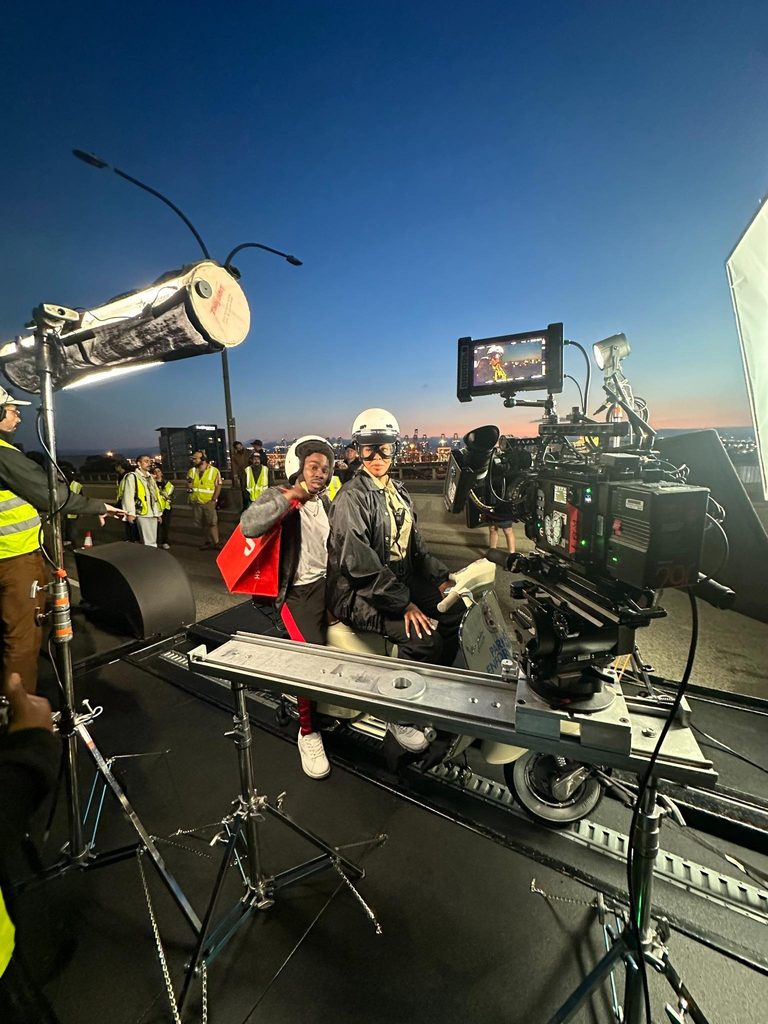
Most brand integrations are designed to occupy space inside an existing story. Dash of a Lifetime tests whether a brand can help create more story instead. Produced by Hartbeat and Invisible Collective in partnership with DoorDash, the 13-minute short takes Darryl the Dasher, Kam Patterson’s supporting character from Livestream From Hell, and makes him the lead of a parallel narrative unfolding across the same chaotic night. Key moments intersect with the Prime Video horror-comedy starring Kevin Hart, Kai Cenat and Druski, while the companion film gives Darryl a motivation and perspective the feature only glimpses. Director Nate Edwards developed the short as the larger production was still evolving, adapting in real time to its improvisation and shifting continuity. Brand Storytelling caught up with Edwards to discuss how the expanded runtime and collaborative development process allowed the film to stand on its own while making DoorDash integral to Darryl’s journey, and what the project suggests about brands extending entertainment properties rather than interrupting them.
As brands become increasingly interested in producing entertainment rather than traditional advertising, what opportunities do you see emerging for filmmakers to tell more ambitious stories within brand-funded projects?
Nate Edwards: World-building. I think there’s an incredible opportunity to create and merge worlds in ways we haven’t fully explored yet.
With this DoorDash project, we were able to create a world within a world, telling a standalone story that existed inside a larger film. I once directed a spec commercial centered around a sneaker that took place entirely within the universe of a PlayStation game.
What’s exciting to me is the freedom to rethink how brands exist within storytelling. We’re no longer limited to traditional advertising formats. We can create characters, build narratives, and explore unexpected connections between brands and culture.
The opportunity to meet audiences in refreshing ways, while deepening their relationship with a brand, has never been greater.
What initially attracted you to Dash of a Lifetime, and how did the opportunity to build a standalone story within the world of Livestream From Hell influence your creative approach?
NE: Honestly, the opportunity to make a short film. Narrative storytelling is what I love most about being a filmmaker, so getting to approach a branded project with that same creative ambition was immediately exciting.
The comedy element was especially intriguing, and we were given a tremendous amount of freedom to make something we would genuinely want to watch ourselves.
At the time, I didn’t know exactly what the visual language or style of Livestream From Hell would be, so I approached Dash of a Lifetime as its own film. I wanted to create something with a distinct identity, tone, and perspective while understanding that it ultimately had to exist within a much larger story.
That balance was part of the fun. How do you create something that feels entirely its own but becomes even more interesting when you realize it’s connected to another world?
DoorDash’s presence in the original film is established through Darryl the Dasher, played by Kam Patterson, so what made that character compelling enough to build an entirely new narrative around?
NE: First, there’s something inherently fascinating about the life of a Dasher. You see YouTube videos following people through a day of delivering food that get millions of views. There’s a natural curiosity about what these people experience.
We can all imagine the strange requests, unexpected encounters, and ridiculous situations someone might find themselves in on their craziest day of deliveries. There’s already a world of storytelling possibilities built into that premise.
The other major reason was Kam Patterson. Kam is hilarious. He’s one of those people where you can simply turn the camera on and something funny and compelling is going to happen.
Between the unpredictability of the job and Kam’s natural comedic instincts, we had a character who could carry an entire story.
How did you approach developing Darryl’s character and story to ensure Dash of a Lifetime could stand on its own as entertainment while remaining connected to the larger film?
NE: We started with a simple question: Who is Darryl?
I’ve known plenty of friends who’ve worked as Dashers, so there was already something familiar and relatable about his circumstances. But what interested me wasn’t just what he did for work. It was understanding why he was doing it.
What are his ambitions? What does he want out of life? What’s motivating him to get through this particular day?
Once we started exploring those questions, we found a character with goals and motivations that audiences could connect with beyond the comedy.
For me, that’s what makes a story work. Even in the most absurd circumstances, there has to be something human underneath it all. If you care about what Darryl wants, you’re willing to follow him through just about anything.
The short unfolds alongside the events of Livestream From Hell, with key moments intersecting between the two stories, so what creative and production challenges came with building a narrative around events that were already taking shape in another production?
NE: There were a lot of challenges, but they were also part of what made the experience unique.
Because there was so much improvisation happening within the feature, we had to remain incredibly fluid. Locations could change, items Darryl picked up could change, and sometimes entire moments would evolve as the other production was shooting.
Performance continuity was another interesting challenge. Kam might shoot a scene for the feature earlier in the day, make a completely different choice from what we’d anticipated in our script, and suddenly we’d have to adjust our story to accommodate it.
It required us to be extremely adaptable and make creative decisions in real time.
As a director, I actually enjoy that kind of problem-solving. You’re constantly listening, observing, and finding new opportunities within the circumstances. Sometimes those unexpected changes lead to something better than what you originally planned.
Working with Hartbeat and writer Thembi Banks, how did you navigate the creative development process, and what did the collaboration allow you to accomplish that might not have been possible within a more conventional branded production?
NE: I love collaborating. I think some of the best creative work comes from bringing different perspectives together around a shared vision.
The most important thing was that we all understood the tone and what we wanted the film to feel like. Once we established that foundation, it gave us the freedom to really explore.
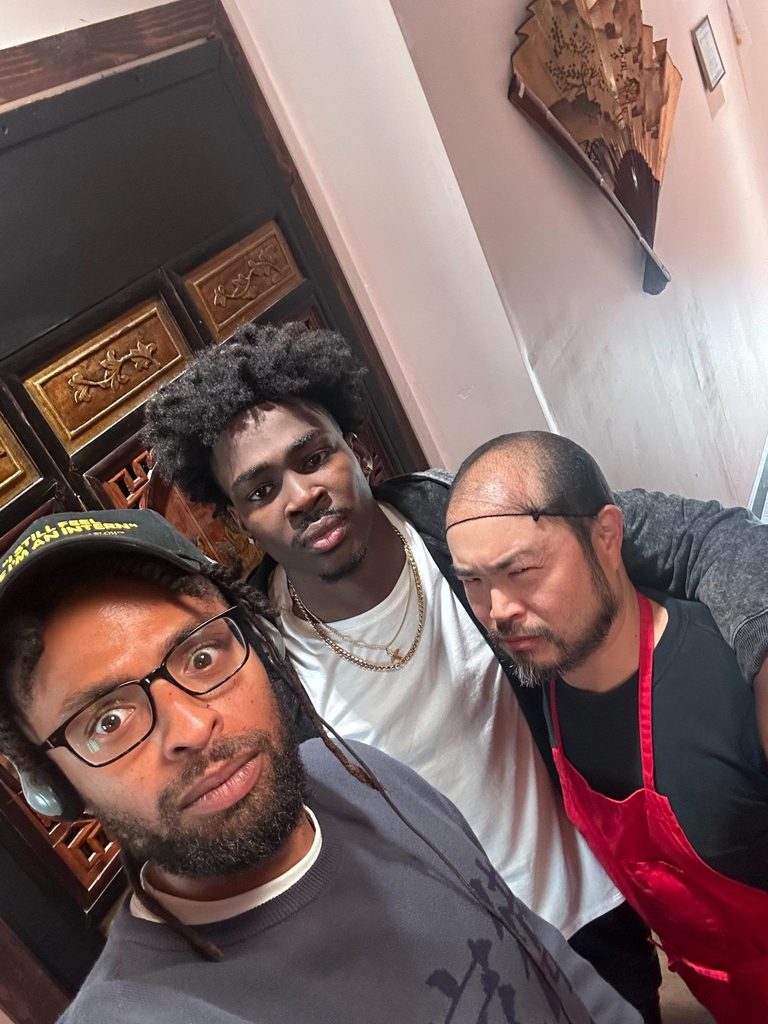
Working with Hartbeat and Thembi Banks, I was involved in shaping the story rather than simply being handed a finished creative concept to execute.
That distinction is important. In more conventional branded productions, the creative can sometimes be so predetermined that there isn’t much room to discover anything new.
Here, we were able to challenge ideas, push the comedy, develop the character, and make choices that served the film as a whole.
There was a level of trust in the process that allowed us to take creative chances. And I think that’s when you get the most interesting work.
With 13 minutes to develop the story, how did the additional runtime change your approach to character development, comedic pacing, and audience investment compared with directing a traditional commercial?
NE: Time is such a gift when you’re telling a story.
In a traditional commercial, you’re often trying to communicate an idea, establish a character, and deliver an emotional payoff in 30 or 60 seconds. There’s an art to that, but it requires a very different kind of storytelling.
With 13 minutes, I could give Darryl depth. We could establish his world, understand his motivations, set up jokes, and allow moments to breathe.
More importantly, we could give him a real goal. Once you understand what someone is working toward, even the smallest obstacles become meaningful.
That also made DoorDash more integral to the story. Dashing wasn’t simply something the character happened to be doing. It became part of the journey toward what he wanted.
The additional runtime allowed us to make the brand’s role feel organic because it was connected to the character’s purpose.
DoorDash is integral to the premise rather than simply integrated into the background, so how did you balance the brand’s interests with the creative freedom necessary to make the film feel like genuine entertainment?
NE: I think the key was understanding where the boundaries were and recognizing that those boundaries didn’t have to limit the creativity of the entire film.
There were naturally moments where DoorDash needed to have more input. For example, when Darryl is delivering food or driving, there are safety, legal, and brand considerations that have to be respected.
I understood that going into the process.
But outside of those specific considerations, we had a tremendous amount of freedom. Everyone involved wanted the same thing: to make something genuinely funny and entertaining.
And because we had 13 minutes, we weren’t constantly trying to force the brand into every moment. We had room to build a story, develop the comedy, and let the audience become invested in the character.
I think that’s an important distinction. The brand doesn’t need to dominate every frame to be essential to the story.
The project brings together a major brand, a Hollywood production company, established entertainment talent, and creators with substantial digital audiences, so what did you learn about navigating those different creative and commercial interests?
NE: Put the story first.
I really believe that when everyone is working toward making the best possible piece of entertainment, a lot of the competing interests begin to align.
Of course, different partners are going to have different priorities. A brand has objectives, a production company has its own considerations, and talent brings a unique perspective to the work.
But a great story gives everyone something to rally around.
Beyond that, I think it comes down to hard work, communication, and listening. You have to understand what matters to each collaborator without losing sight of the larger creative vision.
Some of the best ideas come from being open enough to hear something you hadn’t considered.
Looking at the finished project, what do you think Dash of a Lifetime demonstrates about the potential for brands to participate in established entertainment properties by expanding their worlds rather than interrupting their stories?
NE: I think it demonstrates that there’s a way to sell something while still creating something meaningful.
Audiences are incredibly sophisticated. They know when they’re being marketed to, and I think they’re increasingly interested in experiences that offer them something beyond a sales message.
What excites me about a project like Dash of a Lifetime is that the brand isn’t interrupting the entertainment. It’s helping create more of it.
We’re expanding a world, introducing another perspective, and giving audiences a story they can enjoy on its own terms.
I think that’s where the real opportunity lies for brands and filmmakers. Not simply finding more creative ways to advertise, but investing in stories that people actually want to spend time with.
The world doesn’t need more marketing for the sake of marketing. It needs stories that matter. And brands have an incredible opportunity to help tell them.