


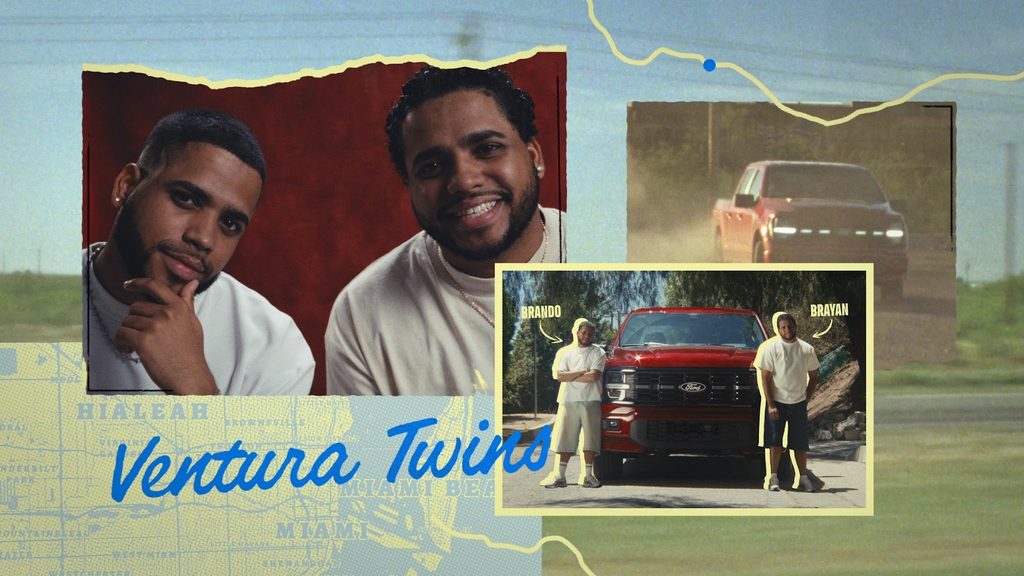
Brands often say they want culturally authentic stories, but the control systems of traditional advertising can work against the openness those stories require. La Caravana, a three-part series created by Think Less for Ford Motor Company, tests a different model. The project follows Brayan and Brando Ventura on a 2,700-mile journey from Miami through Dallas to Los Angeles, placing Latino communities, family traditions and local creative expression at the center while the Ford F-150 Lobo functions as the means of connection rather than the subject. Produced over 13 days with a five-person core crew and released in English and Spanish, the series grew into social content, dealer materials and a Times Square execution without losing the premise that made it work.
Brand Storytelling caught up with Think Less co-founders Cole Sax and Phil Hessler to discuss the trust required to put culture before product, the production choices that created room for unscripted moments, and what brands gain when they loosen their grip on the story.
La Caravana follows Call to Serve as Think Less’s second film with Ford. How has that relationship evolved, and what has growing trust between the studio and brand allowed you to do creatively that might not have been possible at the beginning?
Cole: Even across two films, the shift has been huge. The first time you work with a brand, everyone’s protecting themselves a little. You over-explain, they over-review. On Call to Serve, our crew deployed 24 hours after Hurricane Helene made landfall, and that only works when the client trusts you to make the call in the field. That trust is what made La Caravana possible. It was our idea, brought to them, and Ford gave us room to go find the story first and figure out where the brand sits second. You earn that one film at a time.
Cole, La Caravana originated with Think Less. What opportunity did you see for Ford to tell a story about Latino America that led you to the idea of a 2,700-mile road trip with the Ventura Twins?
Cole: Latino America isn’t one place, and it’s not one story. It’s a family dinner in Miami, a lowrider club in Dallas, a mural wall in Pacoima. Most brand work flattens all of that into one look. I wanted Ford to do the opposite: go to the neighborhoods, let the people who live there tell it, and connect those places to each other. A road trip does that naturally, because every stop is its own world and the drive is what ties them together. The Ventura Twins grew up in Miami, so starting at their mother’s kitchen table gave the whole series a home to leave from.
You have described the creative premise as putting culture first and making the F-150 Lobo the vehicle that gets you there rather than the thing audiences are looking at. How did that philosophy shape the way you presented the idea to Ford and ultimately developed the series?
Cole: It was the first line of the pitch. I didn’t want to make a truck commercial with some culture sprinkled on top. I wanted the opposite. So the proposal led with the people and the places, and the F-150 Lobo showed up the way it does in real life: it’s how you get from one place to the next. That decision carried into everything. We rigged cameras inside the cab so the conversations happened while the twins drove, and the truck became the room where the series talks to itself. Ford got a vehicle that’s present in every episode without ever being the subject.
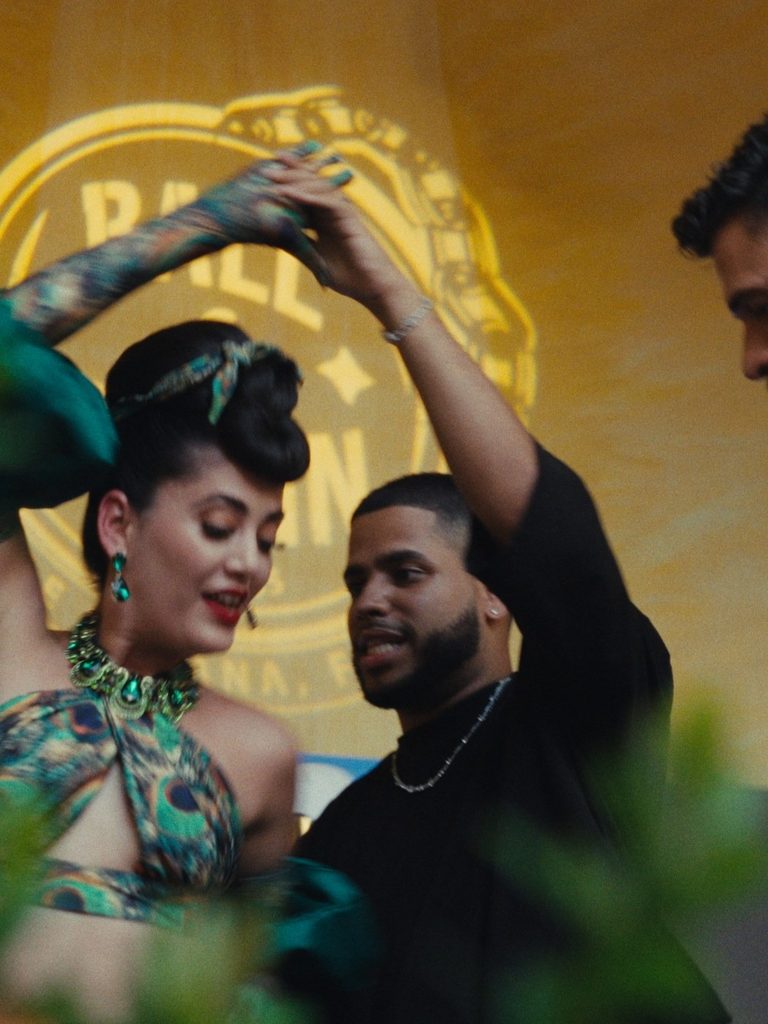
Phil, you have said that “you can’t schedule the good stuff.” How do you direct a brand-funded documentary in a way that creates the conditions for authentic moments to happen while still fulfilling the objectives and obligations of the brand paying for it?
Phil: You have to create an environment that allows for authentic reactions to occur. That comes through building trust with your characters, host and crew. For me, so much of that is in those early prep conversations where you’re getting to understand someone’s story and then setting the intention for how you are going to capture it. Then you go back to that initial intention when you are on set.
At the same time, the brand’s needs are real: the truck, the messaging, the legal rules. So we plan those tightly and get them done, which buys the time and space for everything else. Then you build the conditions: a small crew, cameras that disappear and people who’ve agreed to let you in. You show up, you listen and you don’t force a moment that isn’t there. This whole series is people deciding to let us in: their homes, their work, the stories they don’t usually tell a camera. My job is to protect that and still hand Ford what it needs at the end of the day.
The series moves through distinct Latino communities in Miami, Dallas and Los Angeles. What did you do during development and production to ensure you were telling stories from inside those communities rather than imposing an outside definition of Latino culture onto them?
Cole and Phil: Through a lot of research. We had an amazing producing team, and we scoured the internet to find characters who embody the stories within the themes of each city. Our approach allows people to tell their own stories, in their own words and their own language. Every episode carries English and Spanish voiceover and subtitles, because that’s how these communities actually talk. We built each city around the people who keep its culture going: Dominican food and Cuban cigar rollers in Miami, the man who brought a legendary lowrider club back to life in Dallas, and the painters of Pacoima’s Mural Mile. Then we got out of the way and let Brando and Brayan carry the conversation. We have certain visual goals for how we capture each story, but our job was also to show up with respect, ask good questions and leave room for the answer. The series is theirs as much as it is ours.
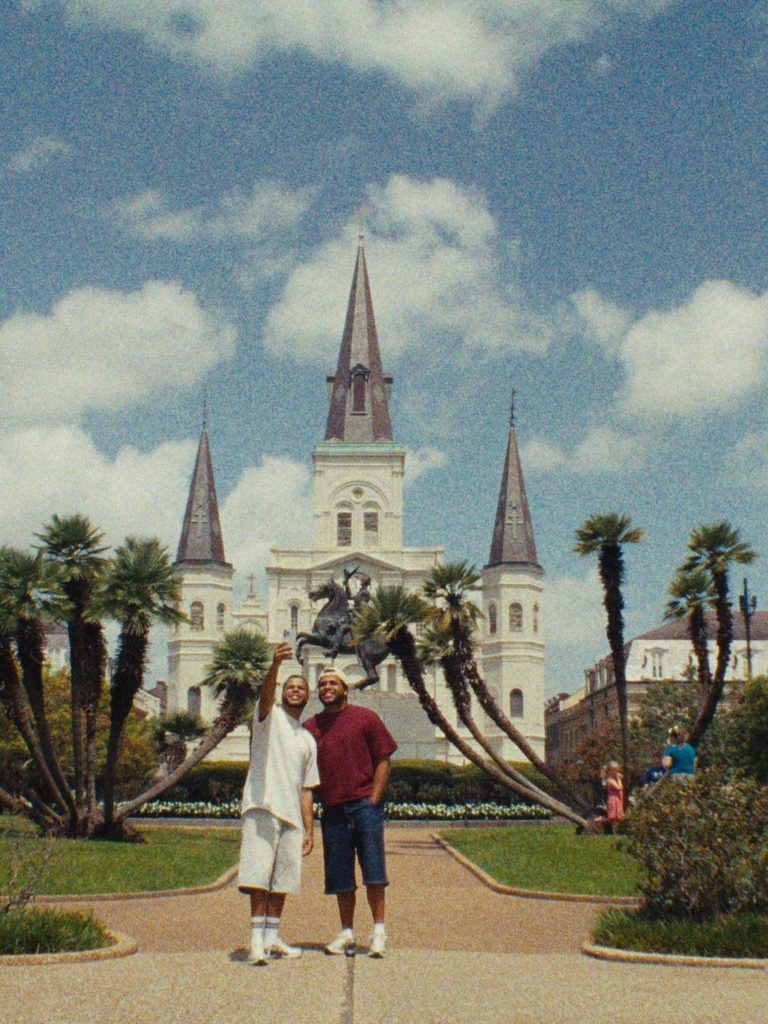
How did casting Brayan and Brando Ventura shape the series, and what made them the right guides for allowing audiences to move naturally between the different people, places and cultural traditions you encountered?
Cole and Phil: Brayan and Brando aren’t hosts in the TV sense. They’re curious, they’re funny and they’re family to each other, which means the audience gets two points of view in every scene. They also carry their own story: Miami raised them, so the series starts at home and moves outward. That gave us a natural reason to cross the country, and it gave people at every stop someone easy to open up to. Good Juju Creative brought them to us, and it was clear on the first call that they’d make strangers comfortable fast. On a road trip, that’s everything.
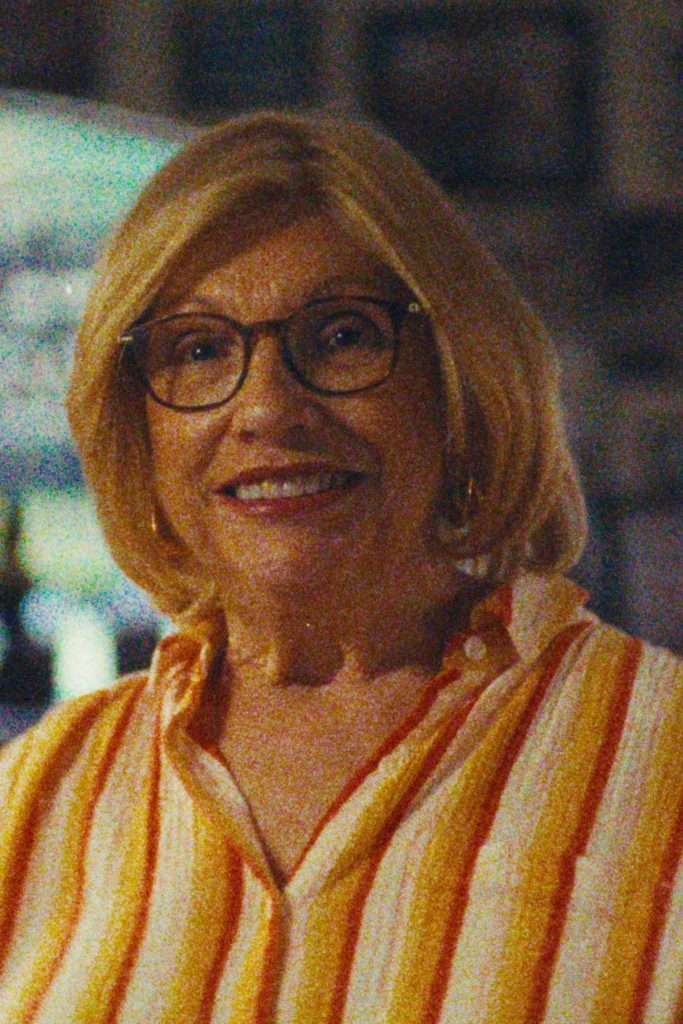
With five core crew members, 13 days, 2,700 miles and 37 participants across five cities, how did the practical constraints of the production influence the visual language and intimacy of the storytelling rather than simply limiting it?
Phil: They made it. We had to be nimble without sacrificing quality. Thankfully, with Dylan Wineland and Marcus Catlett shooting this, we developed a visual style that included elements we would constantly go back to: portraits of our main characters, stylized driving shots through each city and cross coverage for each dialogue scene that would become the backbone of the series.
Five of us drove the route in two vehicles, with local sound and lighting crews joining in Miami, Dallas and Los Angeles. The production van doubled as the camera car. A bigger crew would have changed how people acted in front of us. Small meant we could fit in a kitchen, a garage or the cab of the truck without taking it over. We rigged cameras inside the F-150 so the brothers could just talk, and used the drone to show how far they still had to go. Four of the 13 days were spent driving. You can’t fake that kind of distance, and it’s in the look of the whole series.
La Caravana ultimately became three episodes as well as social content, a Times Square execution, dealer content, and English and Spanish versions. How early were those different expressions considered, and how do you build a central story strong enough to travel across formats without designing it by committee?
Cole: The core story came first, and everything else had to serve it. The episodes, the teaser and the stills were planned from the start, and the bilingual versions were part of the brief. The Times Square version came after production, along with the FAST channel opportunities, and they worked because the story was already clear. The way you avoid design by committee is to agree early on what the story is about. Once everyone knows that, every format is just a different length of the same idea, and the notes become about craft instead of direction.
Between La Caravana and Call to Serve, your work with Ford has placed the brand inside real communities and stories where overt product messaging could easily undermine the material. What have you learned about how much brand presence is actually necessary for audiences to understand who enabled the story?
Cole: Less than people fear. Audiences are smart. If a brand makes something worth watching, people want to know who made it possible. On Call to Serve, Ford showed up through its partners at Team Rubicon and through the work itself, and that said more than any logo could. On La Caravana, the truck is in every episode because that’s how the twins travel, not because a shot list demanded it. When the brand is part of how the story happens, it doesn’t need to interrupt the story to be noticed.
For brands that say they want culturally authentic, documentary-style storytelling but are accustomed to the control of traditional advertising, what do they need to be willing to give up, and what do they stand to gain in return?
Cole and Phil: They have to give up the script and the storyboards. Real people don’t hit marks, and the best moment in a day is almost never the one you planned. They also have to trust the people they hire to make calls on the ground. What they get back is something audiences actually choose to watch, and a brand that’s welcome in the room instead of interrupting it. Lauren at Ford put it best: “They really care about the people whose stories they are telling.” When a brand lets that care lead, the work stops feeling like advertising and starts feeling like a story worth sharing.