

Control has long been the default setting of brand communication. And yet, in a cultural moment defined by what researchers have termed a measurable “Hope Gap,” a deficit of collective optimism that breeds paralysis rather than progress, a different mandate is emerging: stories that restore agency.
Afdhel Aziz has spent the better part of a decade advising Fortune 500 companies through his consultancy Conspiracy of Love, helping brands articulate purpose and impact. But with the launch of Good is the New Cool and its latest series The Solutionaries, created with TIME Studios and the Project Management Institute, Aziz is advancing a more ambitious thesis: that brands must become helpers, not heroes, and that culturally resonant storytelling can close the Hope Gap while scaling real-world impact.
Brand Storytelling caught up with Aziz to discuss the cultural void Good is the New Cool was built to fill, the philosophy of “Be the Helper, Not the Hero” as a blueprint for purpose-led narratives, and how The Solutionaries was crafted to balance emotional humanity with scalable, measurable impact.
What gap in the cultural landscape were you aiming to fill when you founded Good is the New Cool?
With our brand consultancy Conspiracy of Love, we spent the last decade advising Fortune 500 companies like Adidas, Sephora, The Gap and Coca Cola on their purpose and impact strategies. Yet when it came to translating these initiatives into storytelling, we felt like there was a missing ‘genre’ – impact storytelling that was inspiring, entertaining and hopeful.
In fact, there is an actual verifiable ‘Hope Gap’ in society that Yale has measured for many years. People are losing hope and that leads to despair, which leads to paralysis.
We set out to try and solve that with our creative studio Good is the New Cool, whose purpose is to ‘tell stories that fill the Hope Gap and spark courageous action. Our latest project ‘The Solutionaries’ with Time Studios, and our wonderful clients The Project Management Institute is a great proof of concept for what we are trying to make.
What core principles or tensions guided you in developing a company built to help brands and creators tell stories that generate both cultural meaning and measurable impact?
We advise companies to ‘Be the Helper, Not the Hero’ in their impact and storytelling work – in other words, to shine a light on the heroes in society doing work to uplift the world and solve problems that matter to your brand and stakeholders, , rather than highlighting their own achievements, which can sometimes come across as boastful or self-indulgent.
By using their brand equity to uplift others, the brand still gets the halo – but does so in a way that’s more humble.
How did the concept of The Solutionaries emerge from your broader mission to tell stories that close the Hope Gap and highlight people building a better future?
The idea of a ‘Solutionary’ has been present in culture for many decades now. We just thought it was such a powerful term and our definition is ‘someone who is coming up with a game-changing, revolutionary solution to a systemic problem’. They aren’t applying band-aids. They are rethinking the whole approach, using their ‘moral imagination’ (their ability to imagine a better world and what we need to get there), coupled with their creative energy, entrepreneurial spirit, or scientific knowledge .
In my writing for Forbes, I’ve interviewed hundreds of Solutionaries, and I always walk away feeling hopeful about the capacity of human beings to do amazing things. So by making the sharing of their stories a key focus of what we do at Good is the New Cool, we can do two things: help scale and accelerate their impact, but also leave viewers feeling hopeful about the future.
How did your partnership with TIME Studios and PMI evolve, and what did each partner contribute to expanding the scale, credibility, and ambition of the series?
We have been privileged to work with the Project Management Institute for a few years now, and helped craft their purpose statement : ‘Maximising project success to elevate our world’. So, we were in a great position to see how a show like ‘The Solutionaries’ could fit perfectly into their thesis, and show how great ideas coupled with great project management could be transformative for progress.
We took ‘The Solutionaries’ to Time CEO Jess Sibley who immediately saw the potential, and introduced us to her fantastic team at Time Studios – Jeff, Maya, Carmen, Ben and everyone else – who then took the concept and helped elevate it to the highest levels of storytelling, bringing in the right director and team and shepherding this to success. We couldn’t be more thrilled to have values-aligned partners who help raise our creative game.
In developing the narrative spine of the series, what were the key decisions made to ensure the storytelling captured both emotional humanity and the mechanics of impact?
We made sure to approach our subjects as human beings first – understanding their backstory and motivations; from Dr Lisa Dyson witnessing Hurricane Katrina and being moved to start Air Protein to Cyril Gutsch’s encounter with Sea Shepherd founder Captain Paul Watson which lead him to found Parley for the Oceans. That inception of what made them want to become a ‘Solutionary’ is so important in giving people an emotional entry point.
What our amazing director Edward Buckles and his team did was to then also find a way of simplifying the science to articulate the impact in compelling and powerful ways, from illustrative graphics to archival films. The result? Heart and head.
From your vantage point as executive producer, what outcomes do you hope this series achieves in terms of shifting audience perception, inspiring action, or influencing brand behavior?
When you look at a topic like climate change, it’s easy to feel completely depressed and hopeless. By showcasing how we have all the solutions we need to fix the problem RIGHT NOW – we give people two things: agency and urgency.
Agency in thinking about how their own work can intersect with the Solutionaries (by collaborating with them, investing in them, or just buying their products) and urgency, to take action now to combat the worst effects of climate.
When you look at the storytelling ecosystem right now, where do you see the greatest opportunities for purpose-led narratives to move from inspiration to real-world change?
We look at Good is the New Cool as seeking to eventually fill the void left by Participant Media: we’re starting in branded content, but we think there needs a ‘Stories that Fill the Hope Gap’ revolution across all storytelling platforms.
So we’re developing everything from short form social media content series to long form documentaries, to eventually feature films.
And that’s why via our GOODCon ‘Festivals of Hope and Storytelling’ we’re also convening all the partners who can help make this content happen – brands, non profits, foundations and storytellers. We can’t do this alone. We need a ‘Manhattan Project’ size storytelling initiative to fill the Hope Gap.
For storytellers and brand leaders seeking to create work with similar purpose, what are the biggest lessons from The Solutionaries about partnering, crafting narrative, and proving that impact stories can scale?
Think about how you can wrap ‘Cool’ around ‘Good’: use storytelling elements like compelling characters, great visuals, thrilling music and other elements to bring viewers into the story.
Think about what Ryan Coogler did with ‘Sinners’ or even James Cameron with the ‘Avatar’ series, into stories about identity or the environment. Take inspiration from them.
Don’t fall into the trap of making impact content that is worthy, earnest, boring or depressing: we’ve had enough of that, and we need to find new approaches that bring in.
Put ‘Cool’ in service of ‘Good’. Magic happens.
The Solutionaries is available to view now on Time.com
About Afdhel Aziz
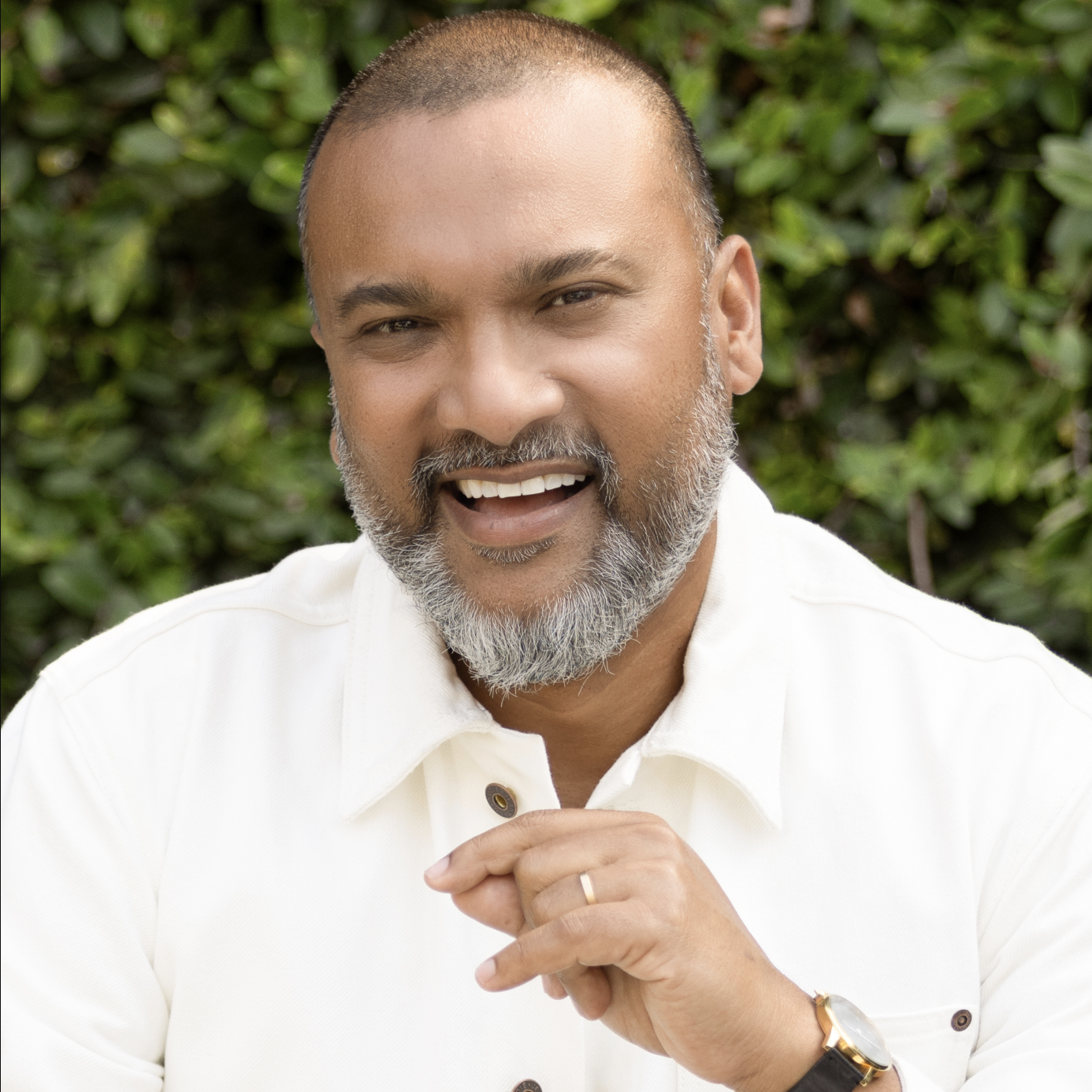
Afdhel Aziz, a former Fortune 500 executive, transformed his career after witnessing the devastation of the Indian Ocean tsunami in his native Sri Lanka. Leaving behind two decades at Procter & Gamble, Nokia, Heineken, and Absolut Vodka to co-found Conspiracy of Love in 2017, a strategic consultancy advises global brands like The Gap, Sephora and Adidas on storytelling as the most powerful skill in the post-AI world. A sought-after keynote speaker who has spoken at Disney, Google and Microsoft, Afdhel is also co-author of the acclaimed Purpose Trilogy, a Forbes contributor spotlighting changemakers, and co-founder of Good is the New Cool, a creative dedicated to storytelling that bridges the “Hope Gap.” His prowess as an award-winning poet, novelist, and filmmaker reflect his lifelong passion for storytelling, and he serves on the board of Choose Love, supporting refugees worldwide. A graduate of King’s College London and the London School of Economics, he now lives in Los Angeles with his wife and son.
Leave a Comment