What kind of content is possible to produce when audience insight, archival depth, and platform-native thinking are treated as creative inputs? Moons of Our Solar System, produced by Little Dot Studios in partnership with Getty Images, is a two-part, 90-minute science documentary built entirely from licensed archival and stock footage. Shaped by real-time intelligence from Little Dot’s YouTube network and powered by Getty’s 34 million-clip archive, the project offers a look at how premium, purpose-driven storytelling can be produced without traditional field shoots while still achieving scale, depth, and global relevance.
Brand Storytelling caught up with Little Dot’s Alex Hryniewicz (Managing Director, Network Social Platforms) to discuss how legacy content libraries, rights certainty, and data-informed creativity can unlock new forms of long-form IP for digital-first audiences.
How do you see the role of purpose-driven, data-informed storytelling evolving for digital-first audiences, and where does Little Dot Studios position itself within that shift?
Little Dot is uniquely positioned due to the sheer scale of its data – over 1000 YouTube and social media channels for the world’s leading entertainment, sport and consumer brands with 11.2B organic views per month – all tied together by our new proprietary tool, ChIP. This scale delivers insights that highlight viewers’ interests and how those interests cross over and intersect across different genres, guiding our storytelling.
One of the most fulfilling parts of building up our factual Network since 2015 has been creating channels around what would previously have been considered niche interests, such as archaeology and art history. Building these audiences on YouTube provides best in class access to data and a global audience base that encourages genuine fandom. Whereas traditional television networks have understandably had to offer a broad range of content, digital-first platforms can really super-serve niche audiences and deliver them exactly the content they want.
What core philosophy guides Little Dot Studios in transforming audience insights into narrative strategy, particularly when producing stories intended to educate and inspire at global scale?
Our philosophy is to focus on expertise and experts, particularly as a differentiator in the global increase in content production. Taking our subsidiary History Hit as an example, whether it’s our subscription only documentaries, YouTube long-form original formats or our extensive Podcast network, what the audience is buying into and responding to is the passion and the knowledge of our expert presenters. We then match this up with really smart and detailed analysis of content performance, ensuring that we know the subjects that resonate with audiences and can deliver them more of what they are looking for. I think that’s actually a really underrated element in content creation – there’s an assumption that audiences crave variety, and of course they do up until a point, but they also enjoy hearing fresh takes on stories that they are already familiar with, so identifying these evergreen topics can be really important.
How did the breadth and versatility of Getty’s 34 million-clip archive influence the creative direction, pacing, and tone of Moons of our Solar System?
When we started our project with Getty, we wanted to identify an area where we had a strong track record of delivering high viewing of content that we had acquired in the past, and space and the story of the solar system were top of our list. We chose the Moons of our Solar System because we felt that was untapped space – most documentaries focus on the planets and only include the moons as part of their story, but they are fascinating worlds in their own right and in many cases, much better prospects for exploration and discovery than their better-known parents! So, we set out with an editorial aim and looked at whether the Getty archive could deliver this for us, and we were not disappointed. Whether it was historic footage of the Race for the Moon or cutting-edge computer-generated imagery of the furthest moons of Saturn and Uranus, we had a wealth of material to choose from. We decided to produce a more meditative and slower-paced film to fit with the viewing patterns of our audience, who particularly enjoy watching space content last thing at night before heading to bed.
What were the key lessons learned in producing a 90-minute, two-part documentary relying on archival precision and editorial craftsmanship?
The film was an entirely experimental undertaking, but backed-up by some fantastic in-house and freelance team members. Research and scripting were carried out by a small internal team and we then assembled those together into scripted sections for each moon of each planet, before sending them off to an expert fact-checker. This was a really important part of the process to ensure no factually inaccurate content made it into the films. We then created bespoke boards within Getty’s systems to match potentially suitable content via keywords to the script, as well as tapping into the BBC Motion Gallery archive that was also partially available to us. The result was a really efficient process to identify suitable visual imagery for each part of the story that we could then assemble very quickly and efficiently. Of course there were gaps that required filling, but I would estimate that 70% of the visuals were matched in this way.
What does the workflow achieved with Little Dot’s real-time YouTube insights reveal about the future of insight-to-story pipelines?
I think there are really exciting opportunities for producers to shorten the time it takes to produce content, especially by identifying suitable content based on metadata in a way that would have previously required extensive and expensive archive research. I think the next iteration of this process will be to take feedback on the films and the parts that particularly resonated with audiences. It may be that a longer film could be cut that just focuses on one moon or one planet.
I think that an iterative approach is an exciting opportunity – not feeling like a film is ever finished, but one where it can be opened up, expanded and updated with new material on a regular basis. That’s what these new production approaches enable that wasn’t practical in traditional broadcast production.
From a brand storytelling perspective, what does this collaboration suggest about how legacy content libraries can become engines for new IP, new audiences, and new forms of digital engagement?
I think it reflects hugely positively on Getty that they are exploring these types of partnerships. So much of the recent narrative has been focused on AI Video Generation and whilst that is a hugely exciting area and opportunity, we are not using the huge amount of existing, authentic video to its full potential. Unlocking these vast archives and creating new and engaging content from them is a huge opportunity, but it is one that must conform to the realities of digital storytelling and the platforms that they operate on.
In short, making money via digital video platforms like YouTube and Facebook is hard, and it’s not guaranteed. Legacy business models of licensing and fees structures just don’t work, so it has to be a partnership between licensees and producers where the risk and the reward is shared. I think that if that is understood, the opportunities are huge, and it can open up long-term revenue streams for license holders and also justify the role that they play by aggregating large amounts of content in one place for efficient production.
As you look ahead, what possibilities do you see for expanding this model into other genres, formats, or storytelling approaches that pair rich archives with platform-native audience intelligence?
As long as partners are willing to be collaborative and leave some of the expectations of their legacy business models behind, the opportunities are extensive. Where archives like Getty have a real advantage is in access to premium, authentic imagery, and this is hugely valuable to telling stories in the historical space, as well as genres like music, film and current affairs documentaries. The key is unlocking the archive in an easy-to-access manner with excellent metadata that enables quick matching and searching.
I think there is still more work to be done here, but anything that can speed up the process of matching imagery to scripts could be a real gamechanger. Of course, it’s important that the tail doesn’t always wag the dog, and so getting better access to archives to enable completely new and undercovered stories to be unearthed is an exciting opportunity. There are incredible new stories and angles to be unearthed based on archive that has not been frequently viewed and interpreted, and this is an area where I think AI tools could really accelerate the process by scanning and interpreting high volumes of deep archive to surface it for programme makers.
About Alex Hryniewicz
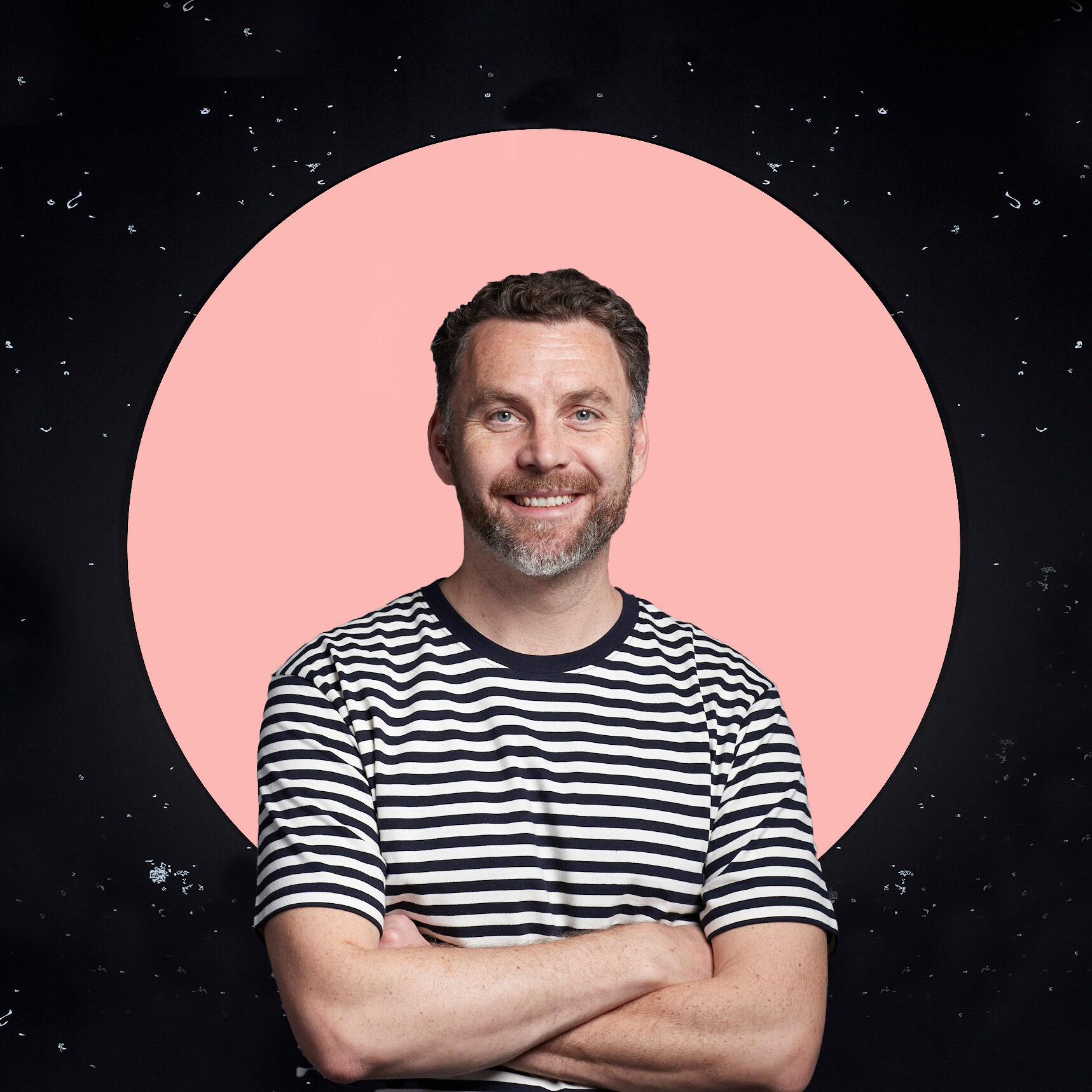
Alex Hryniewicz is Managing Director, Network Social Platforms at Little Dot Studios, a digital media network, social media agency and multiplatform production company. With a focus on establishing meaningful connections between premium content and digital audiences, Alex oversees a division of 30 staff members, ensuring the delivery of engaging content across major digital video platforms and social media channels. In this role, he is responsible for driving revenue growth strategies, providing senior leadership, and implementing strategic initiatives to foster growth within the Little Dot Studios Network. This includes managing channels and brands, as well as focusing on growth and monetization. Most recently he Exec-Produced the digital content created during the search for Sir Ernest Shackleton’s lost ship, the Endurance. Alex also sits across all AI initiatives within Little Dot Studios, evaluating new business opportunities and working with Little Dot’s legal team to ensure all usage is sustainable and compliant.